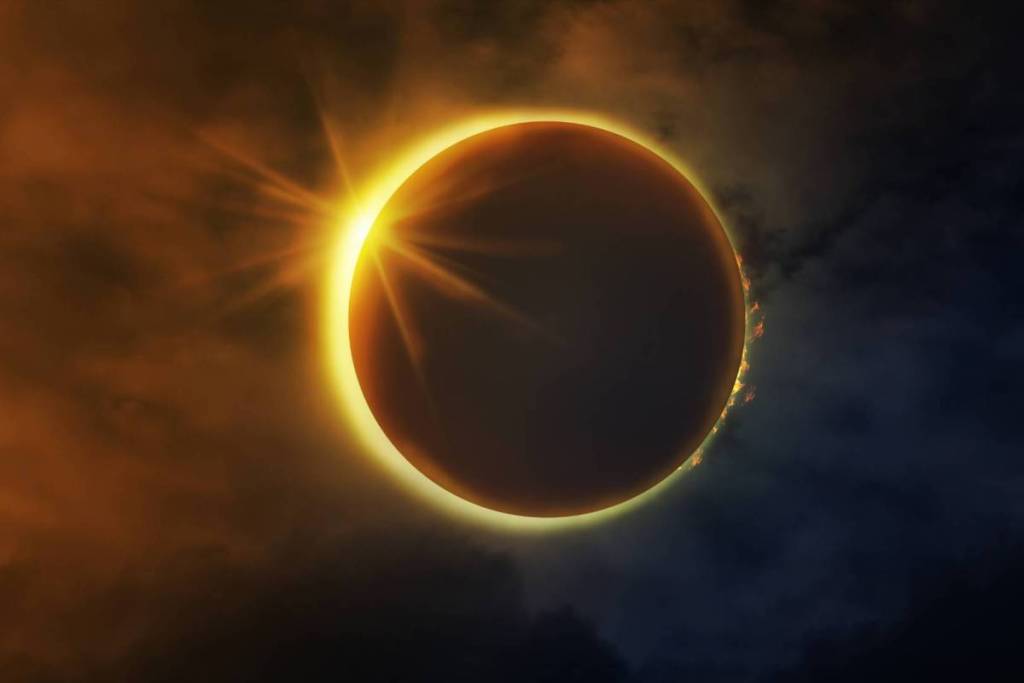

August in Hamburg not only offers us relaxing evenings along the Alster and summery open-air vibes, but this year it’s also treating us to an impressive natural spectacle in the sky. While astronomical events already wowed us last year, a very special highlight awaits us in just a few days: a partial solar eclipse. With the Sun covered by about 85 percent , we ’ll experience the most intense eclipse in the Hanseatic city in many years. We’ll tell you when the Moon will block out the Sun and the best spots in Hamburg to watch the spectacle.
What happens during a solar eclipse?
A solar eclipse occurs when the Moon moves directly between the Earth and the Sun. Since Hamburg lies outside the zone of total eclipse, it won’t be completely dark like night, but according to experts at the Hamburg Planetarium, around 85 percent of the Sun will be obscured .
The celestial event is forecast to begin at 7:10 p.m. The spectacle will reach its absolute peak at 8:07 p.m., when the maximum eclipse is expected to occur. Around 9:00 p.m., the moon will finally move out of the way completely, and the sun will set on the horizon shortly thereafter.
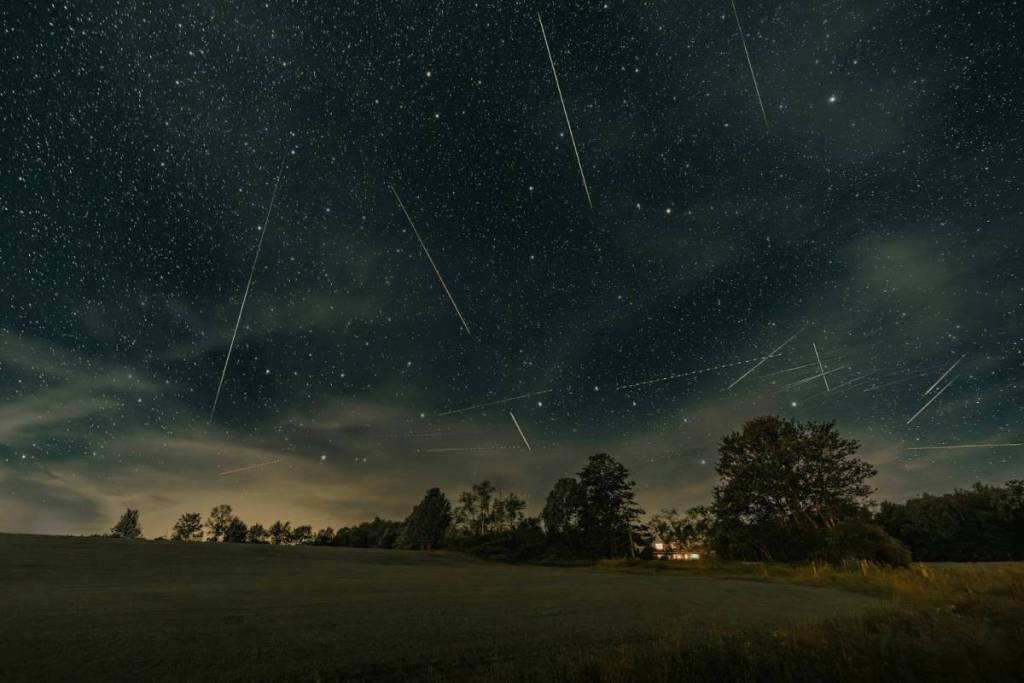
Double reason to celebrate: On the same night, the Perseid meteor shower will reach its annual peak over northern Germany. If you look up at the sky after sunset, you’ll have the best chance of making a wish on one or two shooting stars. Now we can only hope for a cloudless sky so that both events are clearly visible.
The Best Viewing Spots in Hamburg
Since the sun will be low in the sky at the moment of maximum eclipse, you’ll definitely need an unobstructed view. Here are some of the best spots in Hamburg:
- Altonaer Balkon & Stintfang: Both locations offer a fantastic elevated view over the Elbe.
- HafenCity (Strandhöft) & Himmelsberg Baakenhafen: These modern spots are perfectly positioned to let your gaze sweep unobstructed toward the west.
- Dockland: The 25-meter-high open staircase and observation deck along the Elbe also offers an unobstructed view of the horizon.
- Müllberg Hummelsbüttel: For everyone in northern Hamburg, this roughly 80-meter-high hill offers an excellent view of the surrounding area.
Program & Live Broadcast at the Planetarium
If you’re interested in the scientific aspects of the event or want to experience it on a grand scale, the Hamburg Planetarium is the perfect place to be. As part of the “Long Night of Astronomy,” exciting lectures will take place even during the day.
Starting at 7:45 p.m., there will also be an evening program featuring a live broadcast. Since a total solar eclipse will be taking place in Spain, the event will be transmitted directly from there to the planetarium’s dome. There is an admission fee, so it’s best to secure your tickets in advance.
Important Note: How to Protect Your Eyes
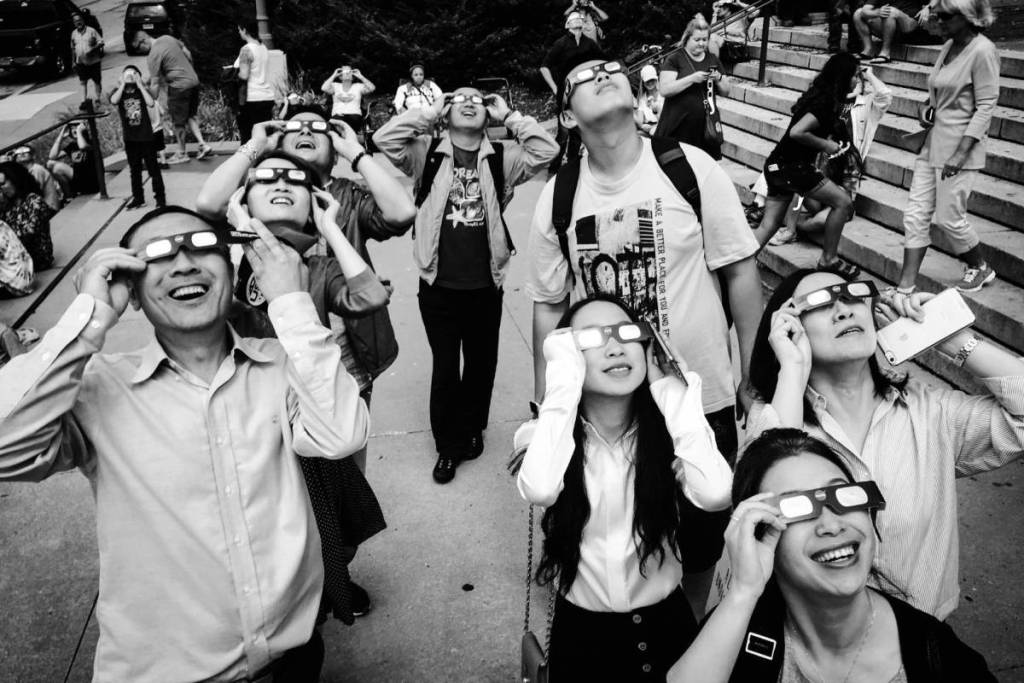
Important for all observers: Under no circumstances should you look directly at the sun without special solar eclipse glasses (ISO 12312-2) , as regular sunglasses do not provide adequate protection. Solar eclipse glasses are available, for example, at the observatory for €5.